Recently the Kerala high Court noted that the claim and proceedings for maintenance under Section 125 of the Code of Criminal Procedure (CrPC) are civil in nature. Therefore, the spouse making the allegation of adultery need only provide circumstantial evidence that logically leads to the conclusion of adulterous behaviour. “When the husband alleges that the […]
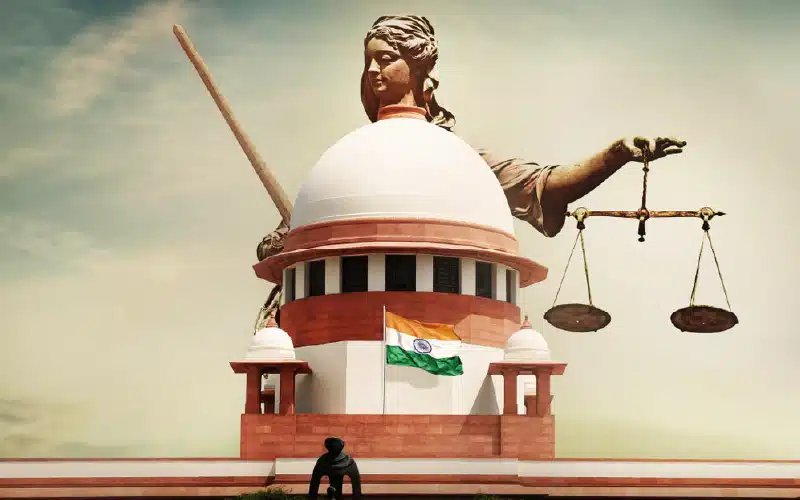
Assent to Bills and Constitutional Morality: Supreme Court’s Definitive Ruling on Governor and President’s Powers

Assent to Bills and Constitutional Morality: Supreme Court’s Definitive Ruling on Governor and President’s Powers

Introduction- On 20 November 2025, the Supreme Court of India, while exercising its advisory jurisdiction under Article 143, delivered a landmark opinion on the constitutional powers of Governors and the President concerning the grant of assent to Bills.In this significant judgment, the Court addressed fourteen questions referred by the Hon’ble President Droupadi Murmu through a […]

𝐅𝐫𝐨𝐦 𝐉𝐮𝐝𝐠𝐦𝐞𝐧𝐭 𝐭𝐨 𝐉𝐮𝐬𝐭𝐢𝐜𝐞: 𝐔𝐧𝐝𝐞𝐫𝐬𝐭𝐚𝐧𝐝𝐢𝐧𝐠 𝐭𝐡𝐞 𝐄𝐱𝐞𝐜𝐮𝐭𝐢𝐨𝐧 𝐏𝐞𝐭𝐢𝐭𝐢𝐨𝐧 𝐏𝐫𝐨𝐜𝐞𝐬𝐬

𝐅𝐫𝐨𝐦 𝐉𝐮𝐝𝐠𝐦𝐞𝐧𝐭 𝐭𝐨 𝐉𝐮𝐬𝐭𝐢𝐜𝐞: 𝐔𝐧𝐝𝐞𝐫𝐬𝐭𝐚𝐧𝐝𝐢𝐧𝐠 𝐭𝐡𝐞 𝐄𝐱𝐞𝐜𝐮𝐭𝐢𝐨𝐧 𝐏𝐞𝐭𝐢𝐭𝐢𝐨𝐧 𝐏𝐫𝐨𝐜𝐞𝐬𝐬

Under CPC 1908, after a court passes a decree in a civil suit, enforcement of that decree is not automatic. The successful party (the “decree-holder”) needs to take separate steps to enforce it. This enforcement process is called “execution.” Without execution, a decree remains only a piece of paper — winning the case doesn’t guarantee […]

Law against marital cruelty applies to those live-in relationships which have attributes of marriage: Karnataka High Court

Law against marital cruelty applies to those live-in relationships which have attributes of marriage: Karnataka High Court

The Karnataka High Court recently held that the offence of “marital cruelty” under Section 498A IPC (now replaced by new provisions under the Bharatiya Nyaya Sahita 2023) can apply even if the relationship is not a legally valid marriage, provided the relationship has “attributes of marriage” and the complainant woman was misled into believing that […]

Supreme Court Clarifies Jurisdiction Under Section 142(2)(a) NI Act: Complaints For Account-Payee Cheque Dishonour Lie Only at Payee’s Home-Branch Court

Supreme Court Clarifies Jurisdiction Under Section 142(2)(a) NI Act: Complaints For Account-Payee Cheque Dishonour Lie Only at Payee’s Home-Branch Court

In the case Jai Balaji Industries Ltd. v. M/s HEG Ltd., the SC held that when an account-payee cheque is dishonoured, the complaint under Section 138 of the Negotiable Instruments Act, 1881 must be filed in the court having jurisdiction over the branch of the bank where the payee maintains their account (i.e. the payee’s […]

When a husband can claim maintenance

When a husband can claim maintenance

  Under Hindu Marriage Act, 1955 (HMA): Section 24, Hindu Marriage Act, 1955: This allows interim (pendente-lite) maintenance and litigation-related expenses if the husband does not have an independent income sufficient for his support and the wife has the ability to pay Section 25, Hindu Marriage Act, 1955 : This allows the court to order […]

Spouses living separately not ground for divorce, courts must identify who broke the marriage: Supreme Court

Spouses living separately not ground for divorce, courts must identify who broke the marriage: Supreme Court

The Court held that simply living separately does not, by itself, amount to a marriage having irretrievably broken down Before granting divorce on the ground of “irretrievable breakdown,” courts must conduct a careful, fact-specific inquiry into who caused the separation. The bench emphasized that there must be “cogent evidence of wilful desertion or refusal to […]

Summary Suit under Order XXXVII of the Code of Civil Procedure, 1908

Summary Suit under Order XXXVII of the Code of Civil Procedure, 1908

A summary suit under Order XXXVII of the Code of Civil Procedure, 1908 is a fast-track civil remedy designed for cases where the plaintiff’s claim is clear, definite, and based on written documents, making a prolonged trial unnecessary. It is primarily used in matters involving negotiable instruments (like cheques, promissory notes), written contracts, invoices, or […]